The Big Green Lie
Why Global Climate Change cannot be resolved without considering our numbers!
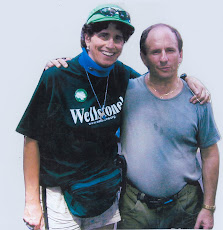
By Dr. Karen I. Shragg
Nearly the entire Global Climate Change movement is delivering a message that is ultimately a GREAT BIG GREEN LIE. Yes the planet is warming due to human activity. That’s the truth. The lie that is being perpetuated is that speaker after speaker and book after book about this issue leave out stabilizing and humanely reducing human population growth as a critical part of the solution to this critical issue.
The lie can be summarized in the way that the current anti-carbon messages have portrayed the ideal green citizen. This model citizen takes public transportation to work, drives a hybrid car on weekends to the organic farmers market and to the thrift store to buy used clothing. They use greener light bulbs, install bamboo flooring and energy saving appliances and use battery operated lawn mowers. Once and a great while this model citizen even gets to eat a vegan diet to lower their carbon footprint with greater effect than changing their mode of transportation.
I am one of those who can be found with my energy saving refrigerator full of organic tofu, tempeh and organic hemp butter. I love attending the ever more popular Living Green Expo here in Minnesota so that I can buy my rechargeable batteries and take them home in my cloth bag. But even as I leave my co-op, my favorite expo and the thrift store, I feel like screaming, BUT WHAT ABOUT OUR NUMBERS???
The message that almost all speakers on Global Climate Change give is that going green with a focus on green technology and behavior changes will accomplish ENOUGH. This is a lie It is not that we should stop trying to come up with ways to lower our consumption of our huge ecological footprint, it is that the numbers side of the equation is even more critical. The fact that it is fueling our rapid consumption is being woefully ignored to the point, I would argue, of out and out lying.
The US increase in greenhouse gas emissions mirrors our increase in population growth, 13% in a ten year period between 1990-2000.* How many even realize that we added 100 million people to the United States since 1970? (Much of this is due to immigration policies fueled by overpopulation in other countries. The immigration issue is another very difficult one to address in ways that are not rooted in discrimination, but the alternative is to create a future where a multitude of problems will be so much more difficult to address.)
Using an example of a child who is now three years old, when they are senior citizens in the year 2075, if our current rate of growth in the USA continues as it is today, guess how many people will be living here? If you guessed ONE HALF BILLION you would be right. We already know what more crowded looks like. We already know the consequences. Is that what we want for our country?
Does pounding away at these numbers help create a population perspective? Does knowing that we are growing by 365 per hour in the US net gain as a part of 9,000 per hour global net gain help? It’s very important to know these numbers and use them in our talks, but too many people do not get the very basic concept that our planet has limits to the way it can sustain people.
Getting people to understand basic ecological principles has been the assumed goal of our profession, yet by all indications the general public doesn’t get it, or is afraid to get it. That is very disheartening after decades of environmental education efforts. It is even more disturbing when the so-called experts don’t get it either, because they are the ones who have become the gurus on this topic. They are the ones who have the ear of the public and the microphones of the media right now.
They do talk about the fact that we are running out of our main sources of energy, oil, gas and coal. They know that water is in limited supply. Yet they somehow are able to look this issue squarely in the eyes and offer solutions without discussing the part about how our rapidly growing numbers are the reason we are using up our resources so rapidly.
When I hear from these experts talk about how we can do this, how we can beat the worst of climate change disasters if only we invest in green technologies and install conservation measures, that I feel it’s time to hide the razor blades. Their reluctance may be based in denial or because the solutions seem at first blush to be too politically incorrect to address. Several countries have already found creative and humane ways to encourage lower birth rates demonstrating that addressing this issue is neither or inhumane.
I asked the convener of one of these green conferences whether we he would rather live on a planet of 2 billion (which is the estimate of how many of us could live at a European life style) or 9 billion our projected numbers in 2050. Instead of responding with what I thought was the only sane answer, he said that if they were living sustainably, 9 billion would be just fine. My eyes crossed with the thought of where the water would come from, where the wildlife would live, where the food would be grown.
My obvious swoon provoked a lecture from this well-intentioned truly lovely tree hugging person that I was living inside the box, and that technology would make the Earth able to accommodate all 9 billion of us. I slumped down into my recycled fiber chair and felt as if a hybrid bus driven by a hemp-clothed global warming expert had just run over me.
*

Subscribe to:
Post Comments (Atom)

.jpg)
.jpg)


 Posts
Posts


Excellent point - I would add one variable - rate of consumption per person and per unit of economic growth
ReplyDeleteThe equation is one of proportionality
If the avg American consumes 30x someone who lives on $2/day
Let's call that 30x of consumption
Europeans consume approx 18x
Japanese are 22x
nosmokeinbars@COMCAST.net
World pop 6.7 bn x avg 2 units of consumption =13b impact
USA 300mil x 30 units = 9b impact
Europe 720 mil x 18 units = 10.3b impact
Japan 120 mil x 22 units = 2.5b impact
Add the impact units up = 34.8 total
Please share this concept with others - clearly each addt'l USA or European born causes far greater harm to our world. And no amt of greening the edges will make much of a difference in the end. We need to both reduce our numbers AND drastically cut consumption immediately to avoid major ecological collapse
Chip Barnes
Baltimore, MD
Working on book "The Big Green Lie". Ready Fall 2009
That's 1.4bn high-level consumers